Project
Multi-agent system that validates synthetic IT systems against NIST 800-53 controls. Per-agent identity, inter-agent authorization, hash-chained audit, human-in-the-loop containment.
A two-agent system that takes a synthetic IT target and a set of NIST 800-53 controls, runs the controls against the target's configuration, and produces a findings report. When something fails, the system proposes a containment action and waits for a signed human decision before any change runs. Every action — agent-to-agent message, retrieval, containment proposal, human approval — is cryptographically signed and recorded in a tamper-evident audit log.
Agentic AI systems are deploying faster than the security frameworks that govern them. The standard pattern — trust the model, gate the inputs, log the outputs — doesn't survive contact with multi-agent systems where one agent's output is another agent's instruction. Identity has to live between agents, not just inside them.
Compliance Lab is the personal-time prototype where I work that out. It's deliberately scoped: small control corpus, fabricated targets, two agents. The goal isn't to build a product — it's to put real engineering pressure on the architectural questions that show up in NIST RFI responses, practitioner guides, and zero trust overlays. I write the policy and build the systems; this is one of the systems.
Strict IP firewall: public artifacts only, no firm material, separate naming, personal hardware, personal accounts. The problem space is public; this take on it is mine.
Seven components. Two agents do the work; everything else exists to make the agent actions safe and auditable.
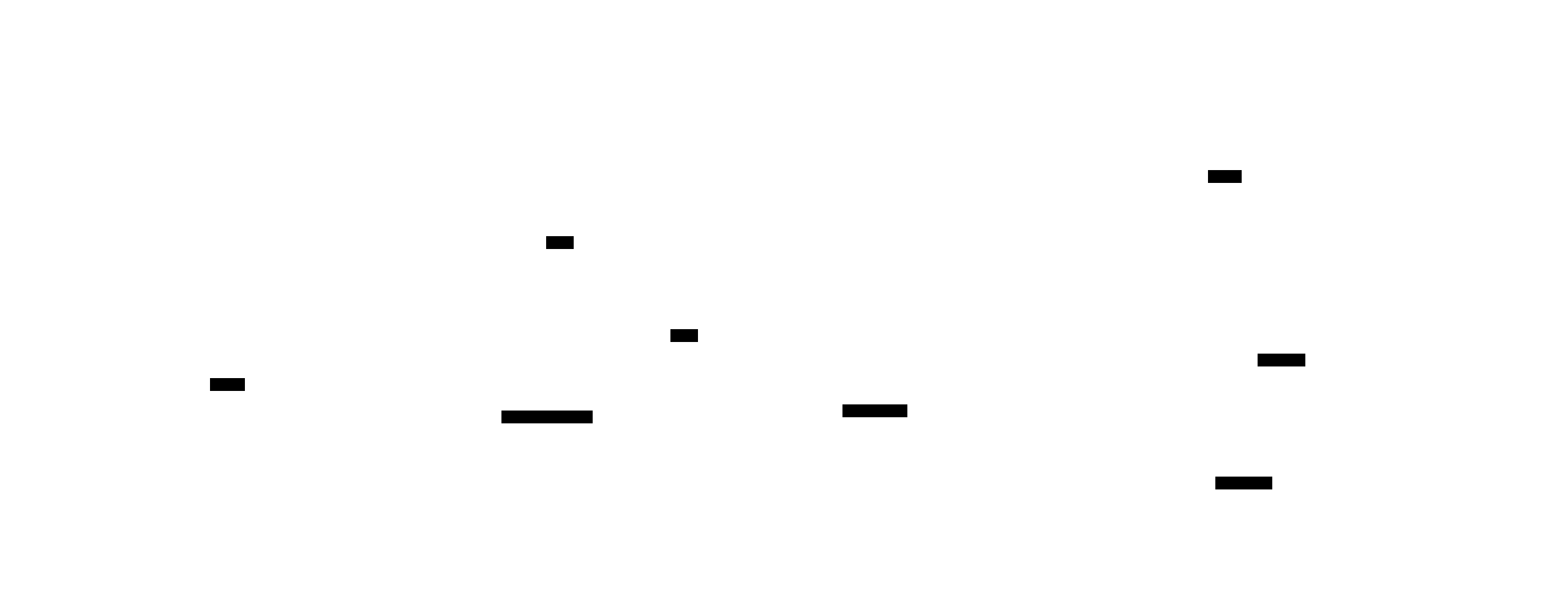
Runs control checks against the synthetic target's configuration. Reads control text from the NIST corpus via PDP-gated retrieval.
Summarizes validator findings into a human-readable report. When a check fails, proposes a containment action.
Every agent action passes through here. Agents are scoped to specific actions; a denied request never reaches its target.
20 paraphrased controls indexed in Qdrant via LlamaIndex. Validator queries by control ID; retrieval is RAG-grounded, not hardcoded.
Fabricated system configurations with deliberate pass/fail conditions. No real assets — full IP firewall safety.
Hash-chained append-only log. Every entry is signed by the actor; tampering breaks the chain visibly.
Containment actions require an Ed25519-signed human decision. Approve or deny; the decision itself is logged.
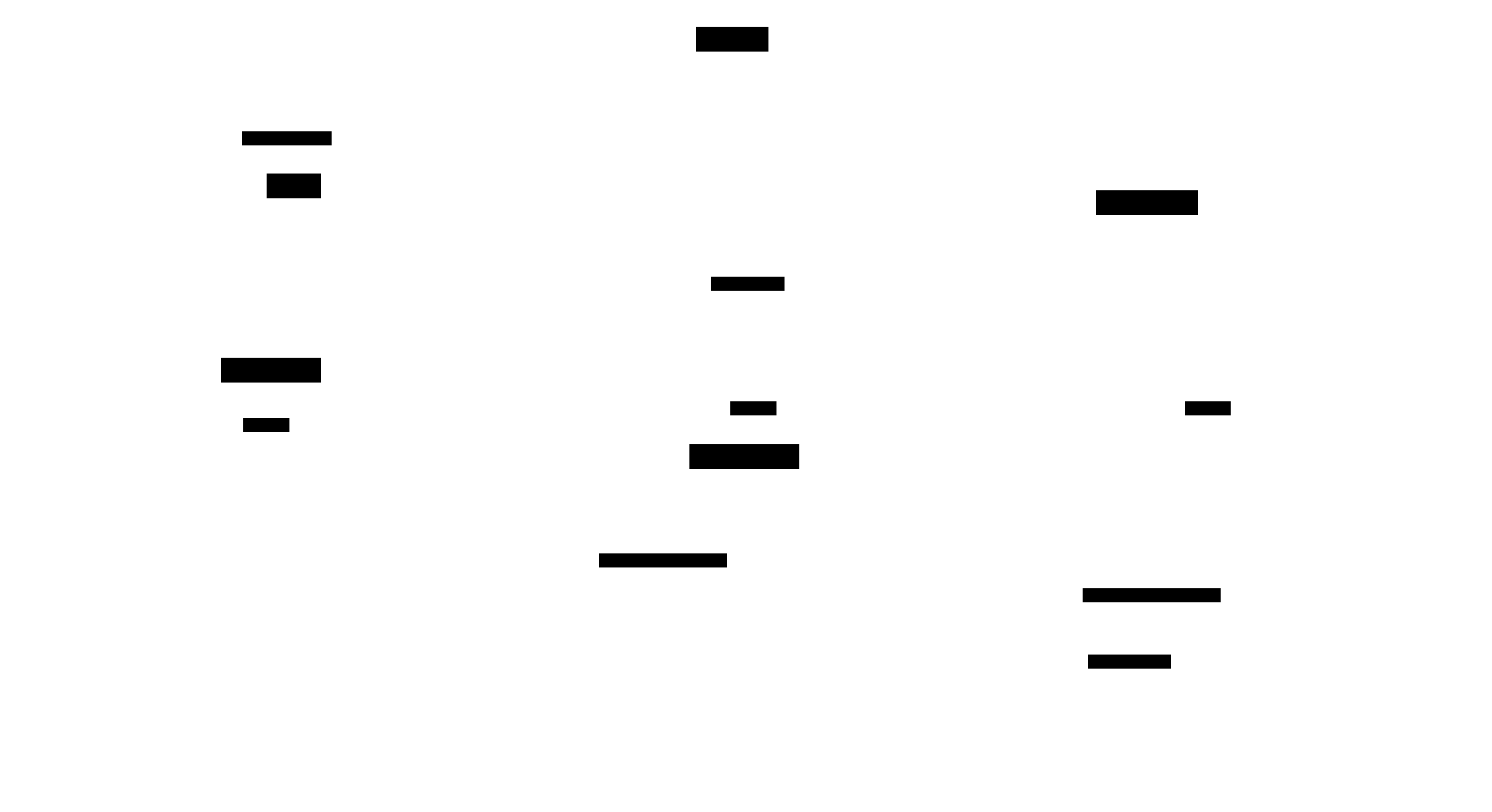
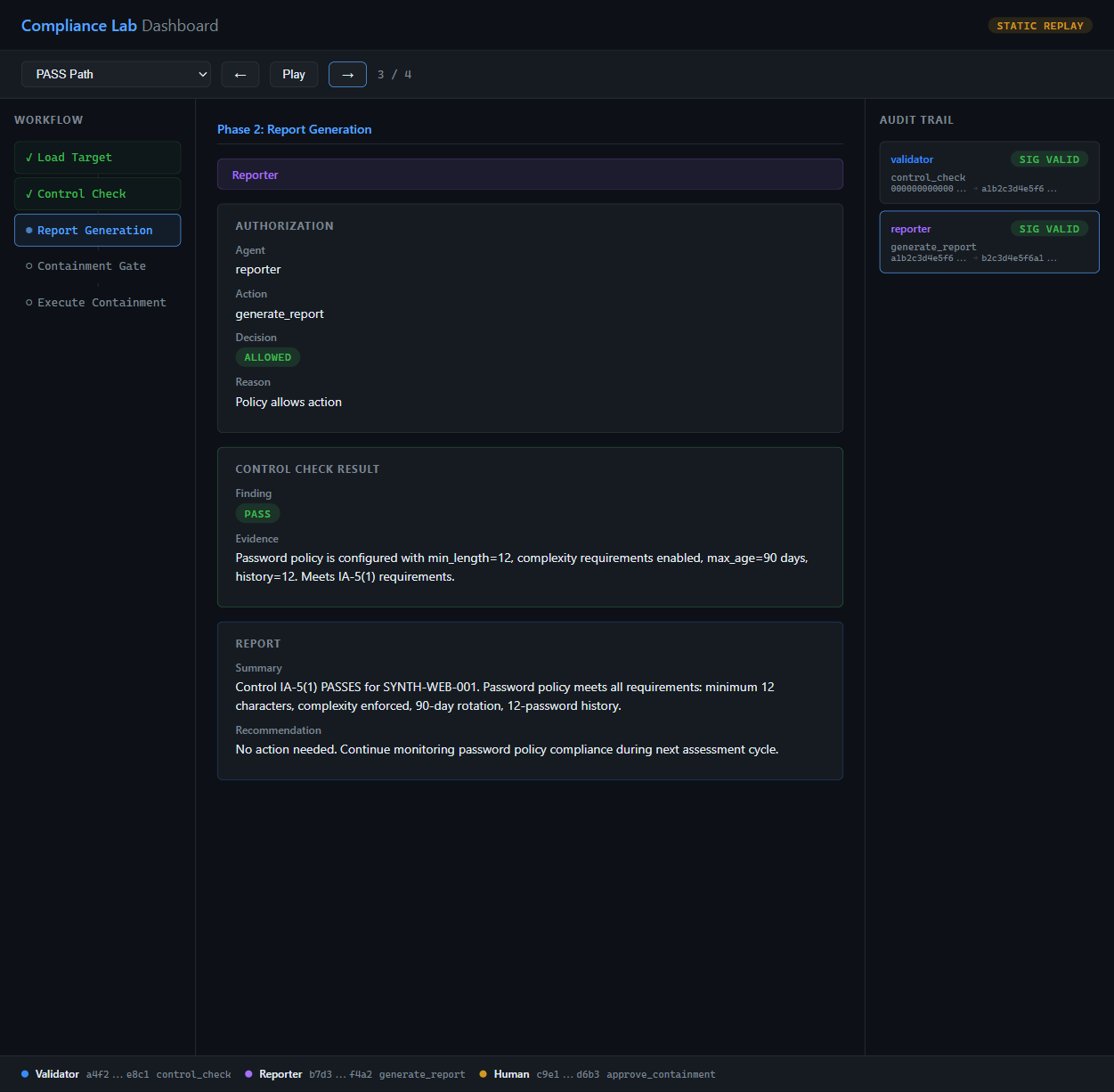
The validator pulls control text via the PDP-gated NIST corpus, evaluates the target's configuration, and produces a finding. The reporter summarizes. Every message is signed and logged. No containment is needed; no human prompt fires.
When a check fails, the reporter doesn't act on its own. It proposes a specific containment action and waits. The human prompt fires; the human's signed approval (or denial) is recorded; only an approved action runs. The model proposes, the human authorizes, the audit log proves both.
Each agent has its own Ed25519 keypair. Every action it takes carries its signature. No agent can act as another.
An explicit Policy Decision Point sits between agents and resources. Authorization is a layer, not a prompt instruction.
NIST 800-53 control text is retrieved at check time via LlamaIndex + Qdrant — never hardcoded, never assumed from training data.
High-consequence actions require a signed human decision before execution. The model proposes; the human authorizes.
Hash-chained append-only log with per-entry signatures. The log is the source of truth for what happened — and tampering with it leaves visible evidence.
An interactive replay of the workflow. Pick a path, step through manually or auto-play, approve or deny the containment proposal. Runs entirely in the browser — no backend, no install.
Full live mode with an actual local LLM (Ollama):
ollama serve
ollama pull llama3.2:3b
ollama pull nomic-embed-text
uv sync --group dev
uv run python scripts/demo.py
Source on GitHub.
This is a research prototype, not a product. The control corpus is 20 paraphrased entries, not all 800+. The targets are fabricated synthetic configurations, not real production systems. The crew is two agents, not the larger ensemble that a production deployment would need. The IP firewall is the reason: public artifacts only, full separation from any client engagement. The architecture decisions (identity, authorization, audit, human-in-the-loop) generalize; the specific scope is intentionally small.